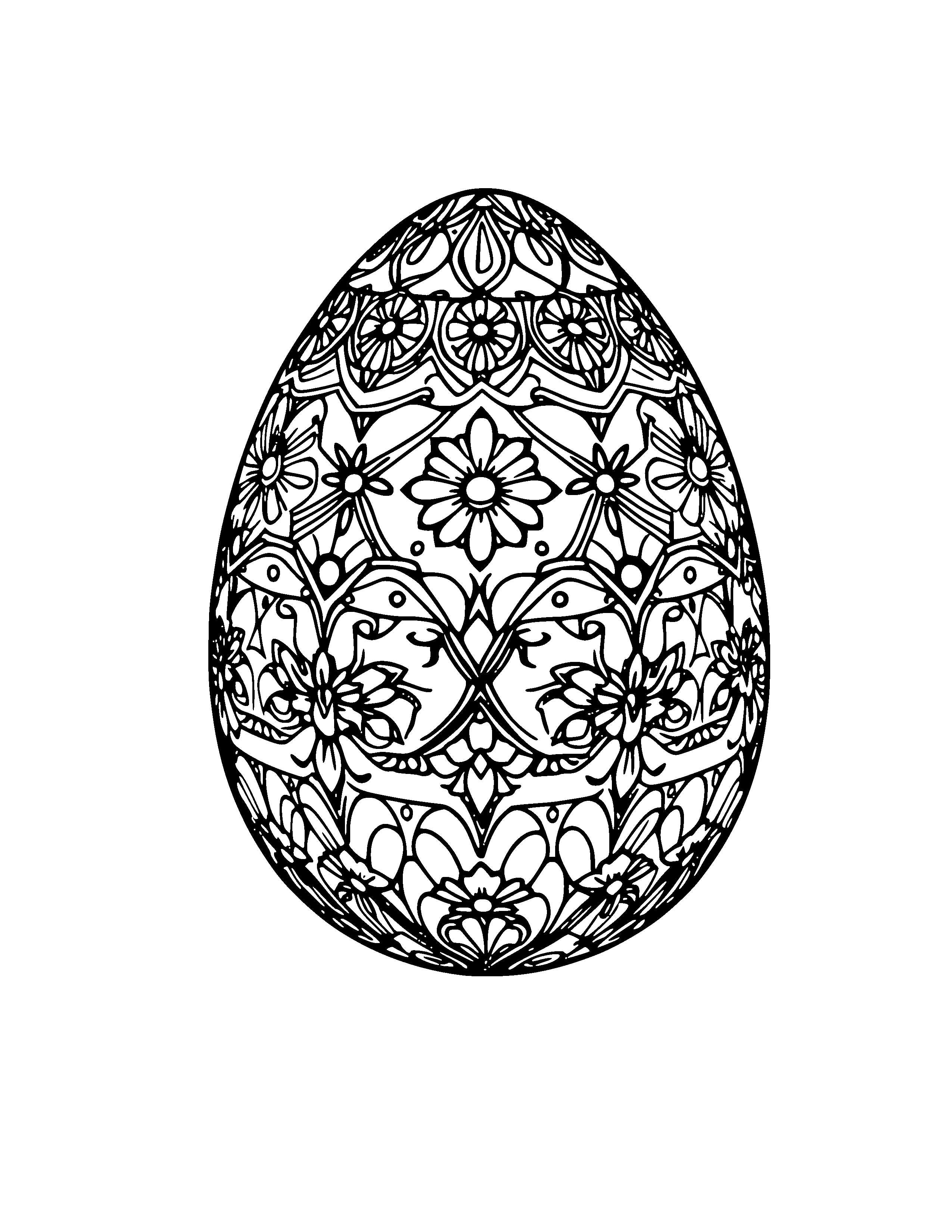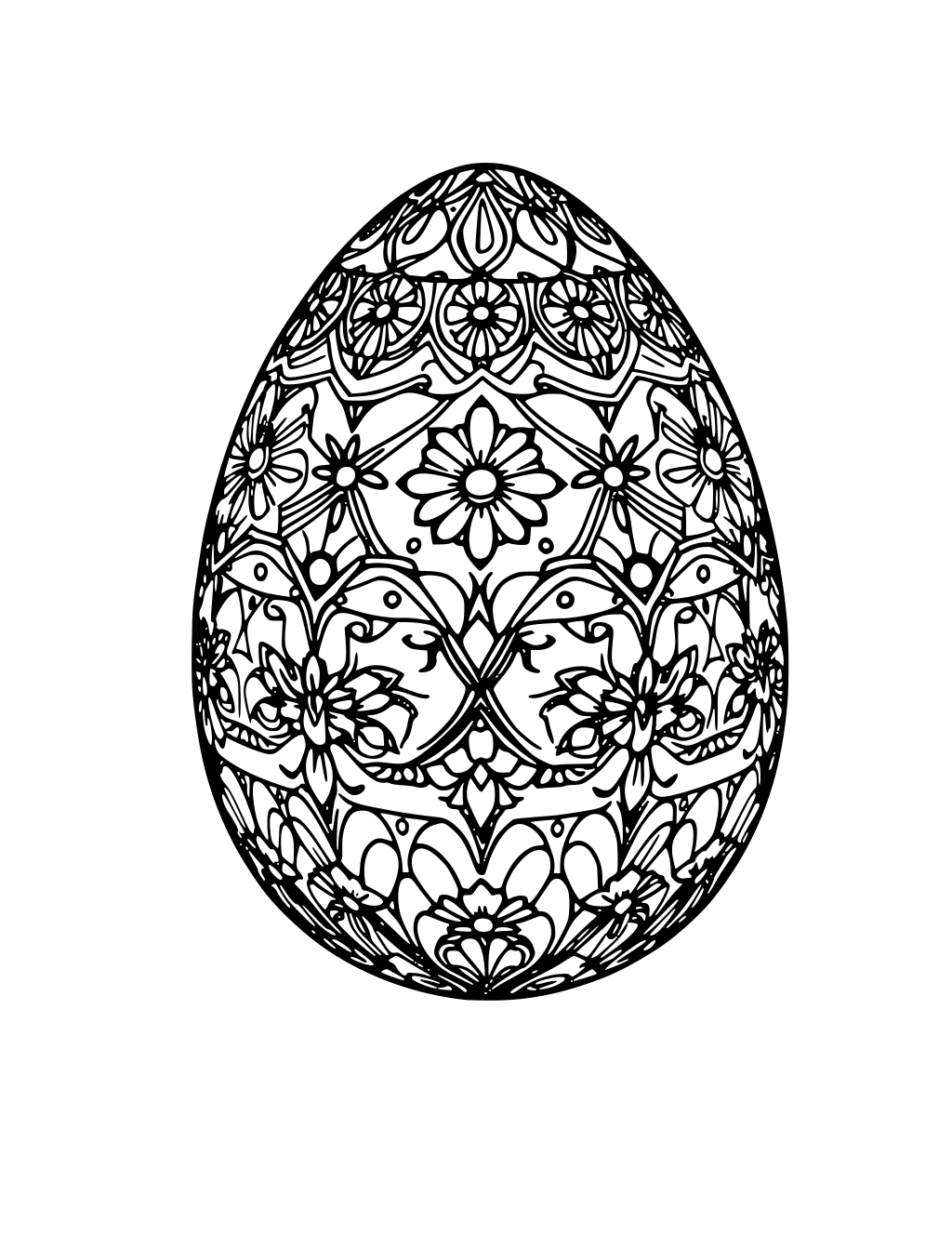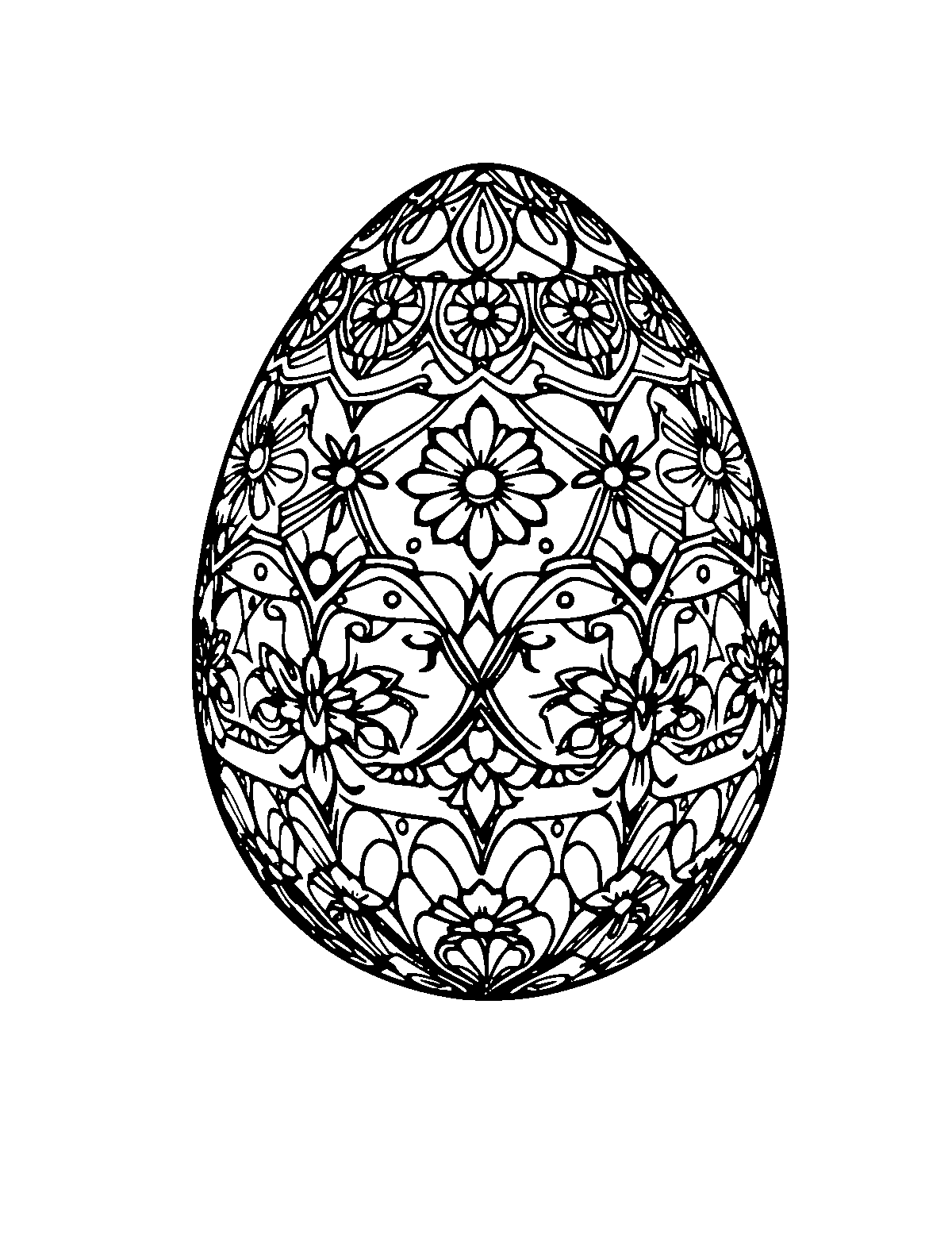
Realistic Easter Egg
- Suggested age
- 9-12
- Difficulty
- 4 / 5
- Detail
- high
- Areas to colour
- 571
- Ink coverage
- 13.9%
- Line weight
- Medium
- Narrowest gap
- 0.4 mm
- License
- CC0 public domain - free for classroom and commercial use
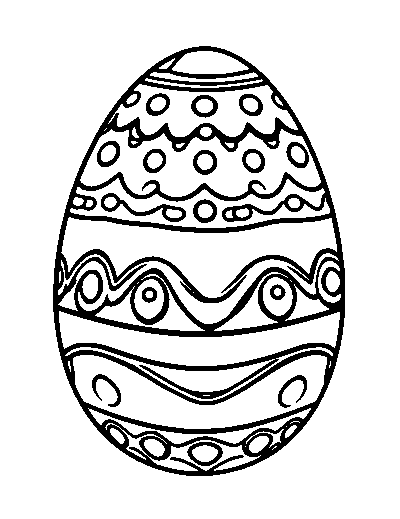
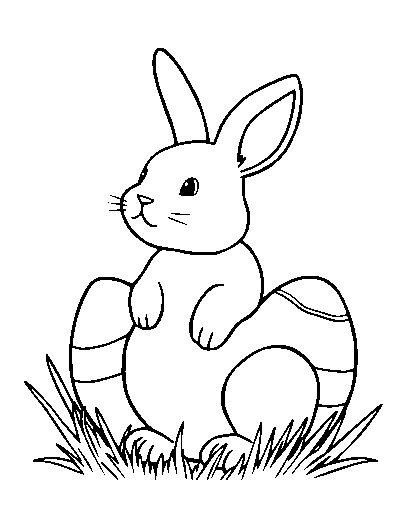
This is a free printable Realistic Easter Egg coloring page. It has 571 separate areas to colour, medium outlines, and covers about 13.8% of the sheet in ink. It prints on one page at 300 DPI on both US Letter and A4.
Printing this page
Standard 20 lb / 80 gsm copy paper handles this page. If you plan to use markers rather than pencils, 24 lb / 90 gsm will stop the colour showing through.
Print at 100% scale rather than "fit to page". Both downloads already leave a 0.25 in (6 mm) margin, which is inside the unprintable edge of every common home and office printer, so nothing gets clipped. The file contains no colour at all, so the black-only setting prints it faster and cheaper.
If it does not print right
If the lines print grey rather than black, check that the printer is not in draft mode and that you have not accidentally selected a colour profile - a pure black-and-white file sent through a colour profile can come out as a muddy composite black built from all four inks.
What's on the page
There are 571 enclosed areas on this page - the separate pockets the outlines divide the drawing into. That is what decides whether a page feels quick or absorbing, far more than the subject does.
The narrowest channel between two lines measures about 0.37 mm at full print size. We measure this on every page because it is what decides whether a marker will bleed across an outline.
The composition is centered, which is worth knowing before you print - it determines how much white space sits around the edge of the drawing.
What to colour it with
For this page we would use coloured pencils or fine-tip markers. A broad marker will cross the narrower gaps before you can stop it.
Who this page suits
We put this page at roughly the 9-12 age range, based on the line weight and how many separate areas it has - not on the subject. Plenty of adults colour pages meant for children and the other way round; the band is a starting point.
At this age colouring works best framed as a quiet reset rather than as a reward. It holds attention without demanding it, which makes it useful after something cognitively heavy.
What to look for in this drawing
Seasonal pages have expected palettes, and the interesting results usually come from breaking them slightly. One unexpected colour in an otherwise traditional scheme is what makes a page worth putting on the fridge.
How to colour this page well
On a page with this many separate areas, the usual mistake is to start colouring immediately and run out of patience halfway. Plan a limited palette first - four to six colours - and decide which one repeats most often. Then work in passes: lay down every area of your first colour across the whole page, then the second, and so on. It is faster, it keeps the result coherent, and it means an unfinished page still looks intentional.
Stay just inside the outlines rather than aiming exactly at them. A one-millimetre margin of white next to the line reads as crisp; crossing the line reads as messy.
What to do with it once it is coloured
Punch a hole in the top of the finished page and hang it as decoration, or glue it to folded card to make a greetings card that is genuinely handmade.
Printed at full size the artwork sits within a 0.25 in margin, so there is a clean border to cut along if you are mounting or framing it.
How to colour the Realistic Easter Egg page
- Print it at full size. Standard 20 lb / 80 gsm copy paper handles this page. If you plan to use markers rather than pencils, 24 lb / 90 gsm will stop the colour showing through. Set your printer to 100% or "Actual size" - never "Fit to page" - so the page prints at true 300 DPI and the right size for US Letter or A4.
- Choose your colouring tools. For this page, reach for coloured pencils or fine-tip markers. A broad marker will cross the narrower gaps before you can stop it.
- Plan your colours. Lean into the colours the occasion already suggests, then add one unexpected colour so it does not look like everyone else's page.
- Colour in the right order. Treat it as several sittings. Pick one region of the page per session and finish it completely - chasing a single colour across hundreds of tiny areas is what makes an intricate page frustrating.
- Add depth last. Save shading and outlining for the end. Press a little harder at the edges of each shape and ease off toward the middle - that single trick makes a flat coloured page look finished.
- Save or display your work. When you are done, colour it online with the "Colour this page" button, or photograph your printed sheet - you can keep a copy in your gallery or turn it into a print.