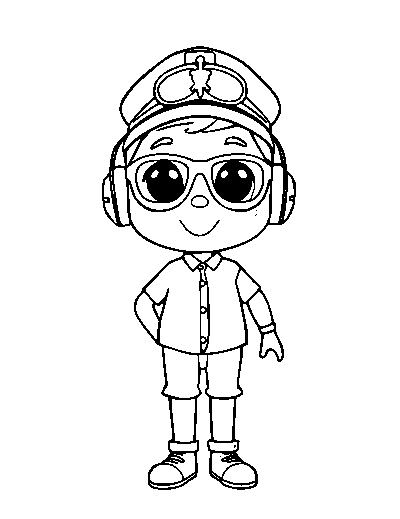
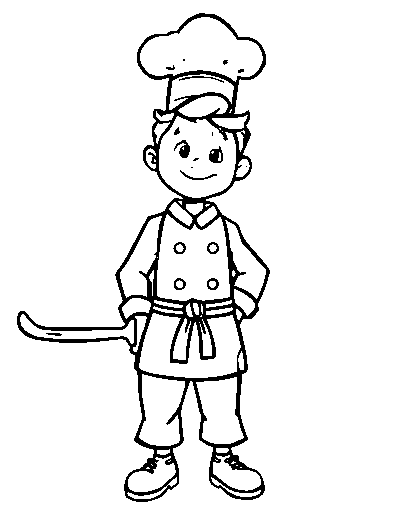
Baker
- Predložena starost
- 2-4
- Teškoća
- 2 / 5
- Detalji
- medium
- Područja za bojanje
- 77
- Pokrivnost tinte
- 11.0%
- Debljina linije
- Thick
- Najmanji razmak
- 0.7 mm
- Licenca
- CC0 javno vlasništvo: besplatno za nastavu i komercijalnu upotrebu
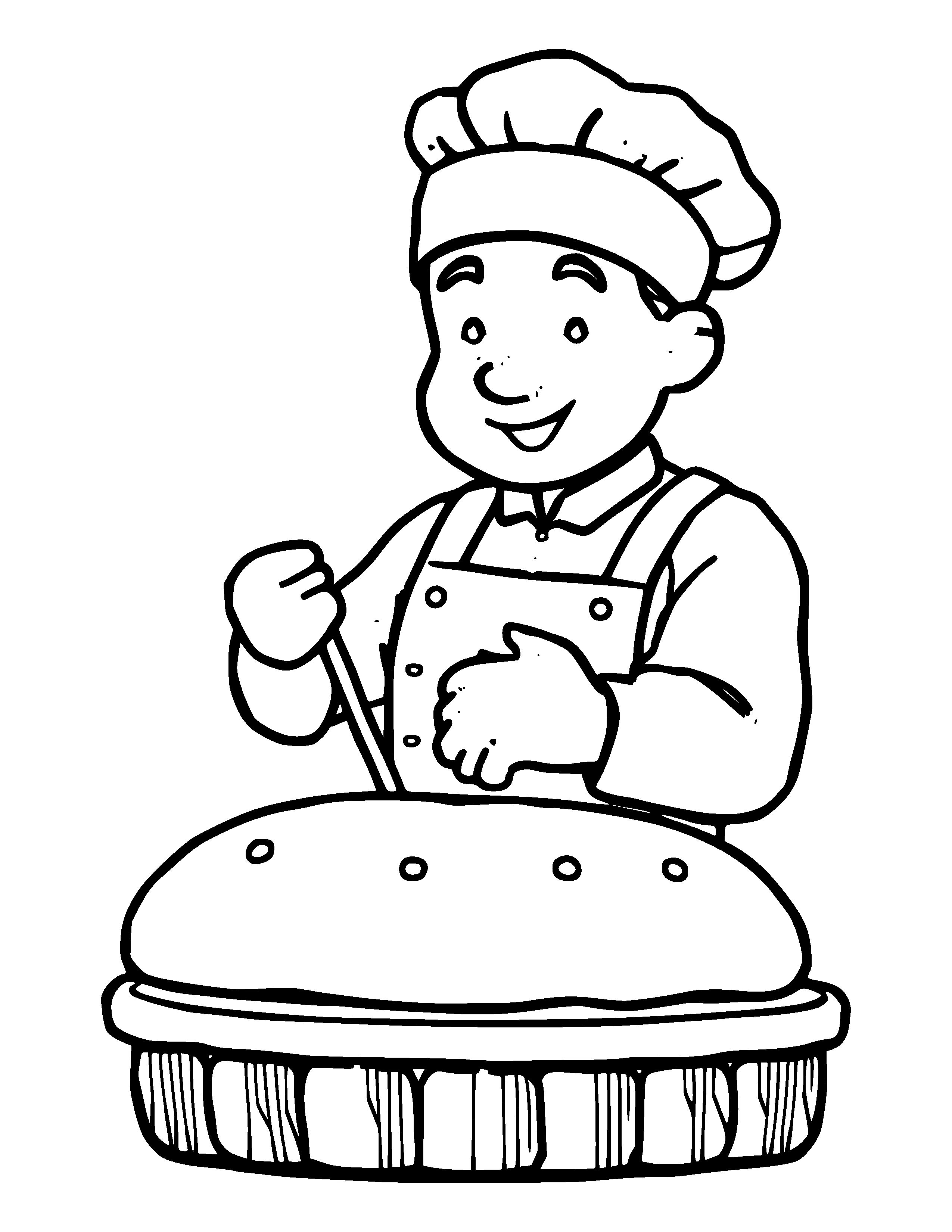
This is a free printable Baker coloring page. It has 77 separate areas to color, thick outlines, and covers about 10.9% of the sheet in ink. It prints on one page at 300 DPI on both US Letter and A4.
Printing this page
Standard 20 lb / 80 gsm copy paper handles this page. If you plan to use markers rather than pencils, 24 lb / 90 gsm will stop the color showing through.
Print at 100% scale rather than "fit to page". Both downloads already leave a 0.25 in (6 mm) margin, which is inside the unprintable edge of every common home and office printer, so nothing gets clipped. The file contains no color at all, so the black-only setting prints it faster and cheaper.
If it does not print right
If the lines print gray rather than black, check that the printer is not in draft mode and that you have not accidentally selected a color profile: a pure black-and-white file sent through a color profile can come out as a muddy composite black built from all four inks.
What's on the page
There are 77 enclosed areas on this page: the separate pockets the outlines divide the drawing into. That is what decides whether a page feels quick or absorbing, far more than the subject does.
The narrowest channel between two lines measures about 0.68 mm at full print size. We measure this on every page because it is what decides whether a marker will bleed across an outline.
The composition is centered, which is worth knowing before you print: it determines how much white space sits around the edge of the drawing.
What to color it with
For this page we would use colored pencils or fine markers: the outlines are bold but some of the internal spaces are narrow.
Who this page suits
We put this page at roughly the 2-4 age range, based on the line weight and how many separate areas it has, not on the subject. Plenty of adults color pages meant for children and the other way round; the band is a starting point.
In a nursery or reception setting this is fine-motor practice more than art. The wide spaces let a child succeed with a fist grip, and success is what keeps them coming back to the table.
In a classroom it fits alongside social-studies-community.
What to look for in this drawing
Faces carry the whole page. Color the eyes last and lightly: they are small, they are what everyone looks at, and they are the one place where pressing too hard cannot be undone.
How to color this page well
Work from the center of interest outwards, and leave the background until last. That way the background color is chosen to support what is already on the page instead of fighting it. If you want depth, press harder at the edges of each shape and lighter towards the middle: it is the fastest way to stop a flat fill looking flat.
Because the outlines are heavy, you can color right up to them without much care: the black line hides any overshoot. That is exactly why thick-line pages suit small hands.
What to do with it once it is colored
Cut it out, tape a lolly stick to the back and it becomes a puppet. Two of them and you have the beginnings of a story to act out.
Printed at full size the artwork sits within a 0.25 in margin, so there is a clean border to cut along if you are mounting or framing it.
How to color the Baker page
- Print it at full size. Standard 20 lb / 80 gsm copy paper handles this page. If you plan to use markers rather than pencils, 24 lb / 90 gsm will stop the color showing through. Set your printer to 100% or "Actual size" (never "Fit to page") so the page prints at true 300 DPI and the right size for US Letter or A4.
- Choose your coloring tools. For this page, reach for colored pencils or fine markers: the outlines are bold but some of the internal spaces are narrow.
- Plan your colors. Choose the character's main colors first (skin or fur, hair, clothing) then fill the background so the figure still stands out from it.
- Color in the right order. Block in the big background areas first, then work inward to the smaller shapes. Finishing the large areas early stops you smudging them later.
- Add depth last. Save shading and outlining for the end. Press a little harder at the edges of each shape and ease off toward the middle: that single trick makes a flat colored page look finished.
- Save or display your work. When you are done, color it online with the "Color this page" button, or photograph your printed sheet: you can keep a copy in your gallery or turn it into a print.